
30 de noviembre · lunes · una jornada, una sala
Programa
once charlas aceptadas en una sola jornada y una sola sala, con sesiones ejecutivas y técnicas, y conexiones B2B voluntarias al final de la tarde.
Ver el programa🇦🇪 X-Ops 2026
Una ciudad. Una jornada. Un mismo ecosistema tecnológico.
30 de noviembre · lunes · una jornada, una sala
once charlas aceptadas en una sola jornada y una sola sala, con sesiones ejecutivas y técnicas, y conexiones B2B voluntarias al final de la tarde.
Ver el programaANTES DE IR
El programa de Dubai
X-Ops Dubai 2026 es una jornada única: programa técnico, sesiones de liderazgo y networking el mismo día. La Entrada General da acceso al programa técnico y al networking; las sesiones de liderazgo y la cena con ponentes son para otros perfiles de entrada.
Dubai
Un día con charlas técnicas sobre IA en producción, plataforma y seguridad, sesiones de liderazgo y tiempo de networking para la comunidad.
30 Nov
once charlas aceptadas, conversaciones expertas y conexiones B2B dirigidas. Los participantes de paneles y mesas se anunciarán al confirmarse.
Las charlas aceptadas aparecen con sus ponentes y duraciones originales. Los horarios pueden cambiar. Horarios GST (UTC+4).
Bienvenida y objetivos de X-Ops.

At Tabby, product managers contribute to production code and write database migrations with coding agents. Daria follows one change from idea to merged pull request, mistakes included, and shows where the line sits between what a PM ships and what stays with engineering. For ops teams this raises two practical questions: how to review changes from people who do not read code fluently, and how to keep database migrations safe. The talk answers both from day-to-day practice.

Platform teams are product teams that never got a product marketer. They have users (internal developers), a competitor (every team building it themselves, or going straight to AWS), a buyer (the CFO or CTO) and a renewal - the annual budget cycle. They run all of that on zero positioning, zero segmentation, and zero proof. So at budget time they walk in with a list of things they did, and a vendor walks into the same meeting with a story about what a business gets. The vendor wins. Not because the platform is worse, but because it was never positioned. My talk teaches four GTM frameworks, each translated into a platform-team artifact they can build on Monday.
Starting September 2026, the EU Cyber Resilience Act requires software manufacturers to detect and report actively exploited vulnerabilities within 24 hours. This session walks through a working automation setup built on Elastic and Ansible: every build generates a live SBOM, streamed into Elasticsearch and enriched against CISA's KEV catalog and EPSS scores, visualized in Kibana. When a detection rule fires, the system checks context and either triggers a scoped Ansible playbook or routes to an engineer. Every action is logged, thereby producing a compliance report draft automatically. Attendees will leave with: 1. A reference architecture diagram and source code on GitHub 2. Ansible roles for SBOM generation, KEV/EPSS enrichment, and remediation 3. A working example turning logs into a compliance report draft 4. An honest look at where automation is safe, and where judgment matters

Every managed Kubernetes offering solves the same problem the same way: you hand the control plane to someone else. That is convenient — until data-residency rules, an audit, or an exit clause force the uncomfortable question: could we run this ourselves, in-region, on our own hardware, tomorrow? This talk shows how we answered "yes" with KubeAid, an open-source application platform for Kubernetes, and its single-binary orchestrator, kubeaid-cli. The CLI starts a throwaway K3D management cluster on your laptop, installs Cluster API, provisions the target on AWS, Azure, Hetzner or plain bare metal, then pivots every Cluster API object onto the new cluster with clusterctl move so it manages itself — and the laptop cluster is discarded. From that moment everything is GitOps: one general.yaml is rendered into a config repository you own, and Argo CD reconciles the complete KubeAid platform — Cilium, cert-manager, kube-prometheus, Rook-Ceph, Velero, Sealed Secrets, and the rest of the stack your applications need — on top of upstream defaults you override only where you genuinely differ. We will set up a cluster live, from an empty directory to a self-managing Kubernetes cluster with the KubeAid platform reconciled by Argo CD. Then we will cover what most talks skip: day two. We will walk through how the same binary reports backup status across the cluster — Velero for workloads and volumes, CloudNativePG for databases — how recovery works when a cluster has to be rebuilt from nothing but its Git repository and its backups, and how the cluster is compliance-ready from day one rather than hardened afterwards: admission policies enforced by Kyverno, continuous vulnerability scanning with Trivy Operator, runtime security with Tetragon, secrets encrypted in Git with Sealed Secrets, access centralised through SSO, and every platform change landing as a reviewable commit — defaults that map to ISO 27001:2022 and cover GDPR and NIS2 goals out of the box. You will leave with a reproducible recipe for an application platform whose entire definition lives in a repository you control — backed up, recoverable, compliant, auditable, portable across providers, and not tied to any single vendor, including the one that wrote it. Takeaways: - How Cluster API's management-cluster pivot removes the "who manages the manager" problem - A GitOps layout where one YAML drives provisioning, the application platform and its backup policy, and drift is impossible by design - How backup health and recovery are built into the platform, and what that means for your exit strategy - What "compliance-ready from day one" looks like in practice: policies, scanning, runtime security and access control as platform defaults, mapped to ISO 27001, GDPR and NIS2
You've trained a great model. It passes validation tests. Your data scientists are confident. Then you deploy it to production and everything breaks. This is the reality organisations face when they treat AI operations as an afterthought. The gap between data science and operations is where most AI projects fail, not because the ML is bad, but because the ops aren't ready. In this talk, we'll navigate the journey from chaos to maturity, building a comprehensive AIOps discipline that covers: The infrastructure problem: Why traditional DevOps assumptions break with ML workloads. How to right-size Kubernetes clusters for GPUs, manage memory constraints, and control costs across AWS, Azure, and GCP. The visibility problem: You can't operate what you can't see. We'll build observability into data pipelines, model inference services, and automated retraining loops, collecting the right metrics, logs, and traces to spot problems before users do. The reliability problem: Model drift isn't a data science problem; it's an ops problem. We'll explore failure modes unique to AI systems and architectural patterns for graceful degradation, circuit breaking, and recovery. The governance problem: How do you version models like code? How do you know if a deployment improved or broke things? We'll apply GitOps principles to the ML lifecycle. The cost problem: Without discipline, AI workloads destroy cloud budgets. Practical strategies for resource allocation, spot instances, and multi-cloud optimisation. Using patterns that work across all major cloud providers, we'll walk through scenarios and design decisions that turn operational chaos into predictable, scalable systems.

An expansion and update to a Bsides keynote talk in 2023 (https://www.superuser.space/latest-news-blog/bsides-berlin-2023-keynote), we take a look at the current challenges in 2026 in the information security "galaxy" and defending it to be ready for 2027. In this talk, she uses her experience this year alone on what it is like being a part of a major digital transformation project in the telecommunications industry working within GRC, learning more on AI from the LLM engineer perspective (to go beyond the AI slop), and what it is like implementing ISO 27001:2022 at startups that have recently started introducing AI.
Building an AI agent demo is easy. Operating one reliably in production is much harder. This session shows how to take an agentic AI application from a local prototype to an observable cloud-native system using Docker, Kubernetes, OpenTelemetry, Prometheus, Grafana and distributed tracing. We will follow requests across LLM calls, retrieval, tools and agent workflows, then examine latency, failures, token usage and dependency bottlenecks. The session focuses on practical AgentOps patterns: what to instrument, which telemetry actually matters, how traces differ from traditional application monitoring, and how DevOps and MLOps practices evolve when nondeterministic AI components become part of the production stack. Attendees will learn: - How to instrument an AI-agent workflow with OpenTelemetry - How to correlate LLM, retrieval and tool-call traces - Which metrics matter for production AgentOps - How Docker and Kubernetes fit into an observable agent platform - How Grafana, Prometheus and tracing help troubleshoot AI failures
Every team I talk to is running AI coding agents now. Almost none of them can tell me what those agents are allowed to touch. We solved this problem for software years ago. You build an image, push it, run it anywhere, and it behaves the same way. Agents skipped all of that. An agent today is a prompt, some tools, and whatever access the machine it lands on happens to have. The security rules live in a doc the agent will never read. Docker's new Kits fix that in a way that feels familiar. A Kit is a normal OCI image that holds the agent, its tools and the rules for what it can reach. You build and ship it like any container, and the rules go with it. Docker has also said it will submit the Kits spec to CNCF, so this isn't meant to stay a one-vendor thing. In this session I'll build a Kit live and run it in three places: - On my laptop with Docker Sandboxes (sbx). The agent gets its own microVM with its own kernel, a network allow-list, and no real credentials inside, because a host proxy adds them on the way out. - In CI, with sbx as the agent runtime in GitHub Agentic Workflows. - In Docker Cloud Sandboxes, launched in September 2026, where the agent keeps going after I close the laptop. I'll also connect MCP tools through the sbx gateway, with policies that decide which servers and tool calls are allowed. The demo is simple: one Kit, three places, same rules. The agent tries to talk to a server it shouldn't, and it gets blocked all three times. I'll be honest about the gaps too. Sandboxes won't stop prompt injection, won't catch bad code that looks fine, and won't stop you from widening the allow-list "just for today". You'll walk out knowing how to package, ship and control AI agents the same way you already handle containers.

PostgreSQL is increasingly considered by organizations seeking to reduce database licensing costs, modernize legacy platforms, and gain greater control over their technology strategy. However, adopting an open-source database does not automatically eliminate cost, complexity, or vendor dependency. The real business decision extends beyond choosing PostgreSQL. Organizations must determine how it will be deployed, operated, supported, secured, and governed. While PostgreSQL can reduce dependence on proprietary licensing, infrastructure costs, cloud consumption, migration effort, specialist skills, operational support, and business-continuity requirements must still be considered. Moving to a managed PostgreSQL service may simplify operations, but provider-specific features can introduce a different form of vendor lock-in. This session presents a practical, decision-oriented framework for evaluating PostgreSQL across three strategic dimensions: cost, flexibility, and vendor risk. It compares self-managed, vendor-supported, and cloud-managed operating models and explains how each affects total cost of ownership, operational responsibility, portability, resilience, and long-term control. Attendees will leave with a balanced perspective on where PostgreSQL can create business value, which costs are commonly underestimated, and how organizations can benefit from open source without transferring dependency from one vendor to another.
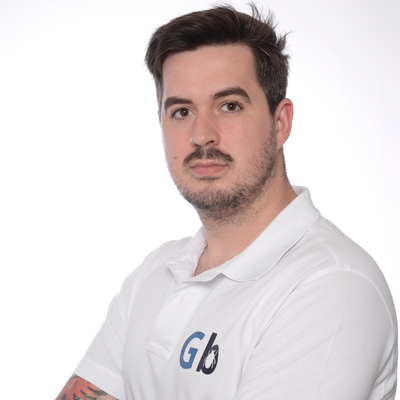
Charla presentada en español. Cualquier cambio de idioma se anunciará.
¿Cómo encuentran los hackers éticos vulnerabilidades en algunas de las empresas más importantes del mundo? En esta charla descubrirás cómo funciona el ecosistema del Bug Bounty a través de casos reales, vulnerabilidades técnicas y experiencias de primera mano. Analizaremos el panorama actual de la ciberseguridad, compartiremos consejos prácticos para mejorar la seguridad de cualquier organización y desvelaremos algunas curiosidades y sorpresas que muestran por qué la seguridad ofensiva es hoy una pieza clave para anticiparse a los ataques. Se presentarán ejemplos técnicos y prácticos de bugs válidos, su impacto, proceso de mitigación y recompensa asociada, comparando el modelo Bug Bounty Program (BBP) frente al modelo de Vulnerability Disclosure Program (VDP). Además, debatiremos la necesidad y viabilidad de una plataforma nacional de bug bounty, que permita canalizar el talento local como herramienta de defensa activa frente al cibercrimen. La sesión incluirá tips personales, enfoques metodológicos y aprendizajes adquiridos durante mi experiencia como bug hunter, buscando no solo inspirar, sino también equipar a los asistentes con una base sólida para explorar este campo de forma eficiente y profesional.
Charla de Tanvi Mittal, Equal Experts. Título por anunciar.

Databases are often the last manually operated part of modern infrastructure. While compute, networking, and deployment have become automated, data platforms still rely heavily on human intervention. In this talk, we explore how Kubernetes and open source tooling are changing that. We’ll break down practical patterns for automating database operations—provisioning, scaling, failover, and maintenance—using operators and cloud-native design principles. We’ll also examine where automation works well today, where it still falls short, and what role AI may realistically play in reducing operational toil. You’ll leave with a clear understanding of how to reduce manual database management and what it takes to move toward a more self-driving data platform.
Networking dirigido opcional con participación voluntaria.
Cierre y presentación de Daedoryx a cargo de Antonio Juanilla.
EL ECOSISTEMA DEL SUMMIT
Conoce las organizaciones en las que trabajan o que han fundado los participantes del X-Ops Dubái 2026. Las marcas enlazan a sus páginas corporativas cuando podemos identificarlas de forma fiable.






La aparición de una empresa en esta sección identifica únicamente la vinculación profesional indicada por sus ponentes en Sessionize. No supone patrocinio, colaboración institucional, aprobación corporativa ni representación oficial de la empresa en X-Ops.
MÁS ALLÁ DEL ESCENARIO
La meta no es acumular ponencias: buscamos un entorno enfocado en decisiones tecnológicas, intercambio de experiencias reales y contactos entre personas que afrontan retos complementarios.
Las charlas aceptadas conservan su profundidad técnica, título original y tiempo asignado para extraer aprendizajes prácticos.
Los paneles y mesas propuestos analizarán riesgo, coste y responsabilidad. Los participantes se anunciarán cuando acepten esos roles.
Las presentaciones voluntarias y el bloque B2B crean oportunidades de colaboración. No se garantizan reuniones.
Panelistas, moderadores, facilitadores, reuniones y catering siguen en coordinación. No se garantizan presentaciones ejecutivas ni resultados comerciales.
Solicita tu entradaCONOCE A LOS PONENTES
Las sesiones aceptadas para Dubái ya incluyen títulos originales, horarios, fotografías y perfiles profesionales. Panelistas y facilitadores de mesas son roles aparte y opcionales, y se anunciarán tras su aceptación.
Senior Product Manager, Tabby
Non-engineers in production: when product managers write database migrations with coding agents
Daria Kasatkina is a Senior Product Manager at Tabby, the Gulf's first fintech unicorn. She leads Tabby's in-house CRM platform, which replaces several third-party tools for back-office teams with one system built for AI automation. Before Tabby she built products at Avito, Tinkoff Bank and Modulbank, including LLM-based tools for customer support at Avito. She runs vibe-coding workshops for non-technical professionals and writes on HackerNoon about AI-first product work and experimentation on small user bases.
Product Marketing for PostgreSQL, MySQL and MongoDB at Percona
Your platform team has no story, and that's why you have no budget
Valeria works closely with community users of PostgreSQL, MySQL and MongoDB, analyzing their adoption patterns and demonstrating the transformative value open source databases bring to businesses. Her understanding of the technical and business aspects of multi-model database capabilities and extensibility helps her articulate its benefits to C-level executives and other key stakeholders.
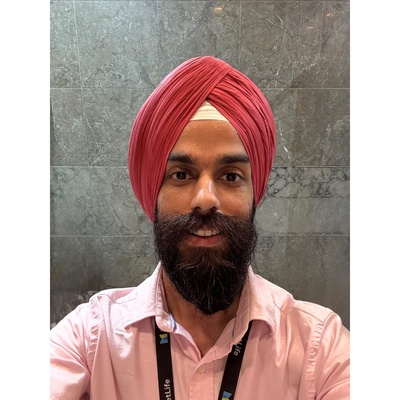
Automation and Observability Lead, MetLife
Detect, Decide, Report: Automating CRA's 24-Hour Vulnerability Response with Elastic and Ansible
Harmeet Singh is the Automation and Observability Lead at MetLife, leading engineering teams building automation and observability platforms across the EMEA region. His work sits at the intersection of infrastructure automation, security observability, and compliance across regulated European environments. Over the past decade, he has worked in platform engineering and large-scale infrastructure automation, focused on systems that reduce manual intervention and improve operational reliability.
CTO at Obmondo · maintainer of KubeAid and LinuxAid
One Binary, Any Cloud: Sovereign Kubernetes with Cluster API and GitOps
Ashish Jaiswal is CTO at Obmondo, a Danish company and member of DOSL (Danish Open Source Suppliers) that runs self-hosted Kubernetes and Linux infrastructure for organisations that need to keep control of their own platforms, and leads a team of 40+ there. Ashish has worked in infrastructure since 2011, spent part of that time at Red Hat, and has been with Obmondo since 2015, rising from engineer to team lead to CTO. Ashish maintains KubeAid, the open-source GitOps application platform for Kubernetes, kubeaid-cli, its single-binary cluster orchestrator, and LinuxAid for Linux configuration management. Ashish brings deep experience in system design and architecture, with a strong focus on engineering mindset: reasoning a design through and catching its errors before anything is deployed. Day to day that means architecture reviews, pulling clusters out of hyperscalers and onto bare metal, and building an AIOps layer so operations need fewer humans at three in the morning. Ashish writes about Kubernetes, Go and self-hosted LLMs at ashish1099.me, is ashish1099 on GitHub, and is a proud father.
Cloudynamics, DevOps Architect
From ML Chaos to AIOps Maturity: Building Production-Ready AI Systems
Founder at Cloudynamics with hands-on experience in DevOps and SRE. Specialises in building and operating cloud-native systems, agentic AI pipelines, and production-grade reliability engineering. Passionate about sharing real-world lessons from the infrastructure and AI trenches.
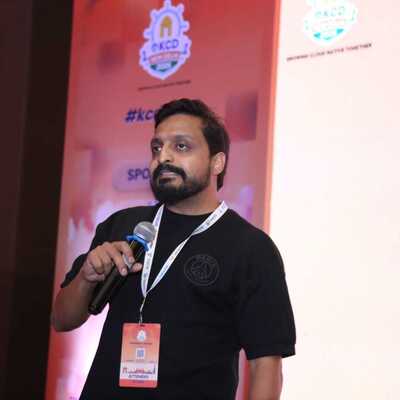
Founder and CISO - Superuser OÜ, CBIT FZCO
Guardians of the Data Galaxy
Hannah Suarez has worked in the information security industry for nearly a decade spanning roles in the software, entertainment, telecommunications and aviation industries. She brings forward a unique insight as a global cyber security entrepreneur that has worked in several countries, who is also a career-changer from the creative industries. Hannah Suarez has previously spoken on cybersecurity in Germany, including the Berlin Bsides 2023 keynote at https://www.superuser.space/latest-news-blog/bsides-berlin-2023-keynote
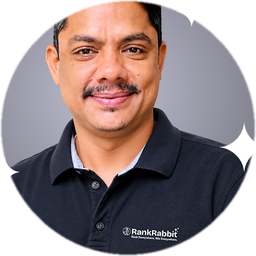
VP of Engineering & Technology, RankRabbitAI
Beyond RAG: Operating Production-Grade AI Agents with Kubernetes, OpenTelemetry and Grafana
Jay Prajapat is a technology leader and engineer with 15 years of experience taking software products from concept to MVP and scaling them into production-ready platforms. At RankRabbitAI, Jay leads engineering initiatives focused on building AI-powered applications and production-grade agentic AI systems. His current interests and contributions include agentic AI architectures, developing intelligent agents using Google's Agent Development Kit (ADK), and advancing AI evaluation practices to improve agent reliability, quality, observability, and performance. He is also engaged with the broader AI ecosystem through contributions and involvement with the Agentic AI Foundation (AAIF). His engineering philosophy is simple: the right boundaries matter more than the right buzzwords, and a system you cannot observe is a system you cannot trust. Jay is a Certified SAFe Practitioner, an active mentor to fellow engineers, and is based in Ahmedabad, India.
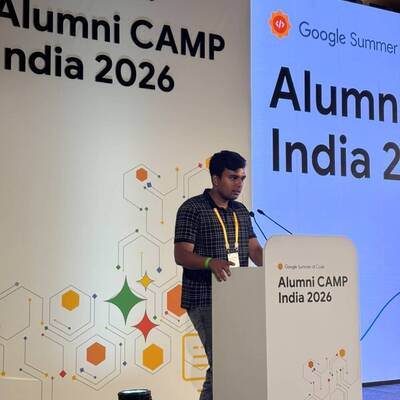
CNCF KubeStellar Maintainer | Docker Captain | LFX Mentor | 2× GSoC | SRE at Obmondo
Agents Are the New Containers: Packaging AI Agents and Their Guardrails as OCI Kits
Rishi Mondal is a SRE at Obmondo , CNCF KubeStellar Maintainer, and Docker Captain . A Linux Foundation Mentor, GSoC Mentor at CNCF, and OWASP Mentor he uniquely progressed from LFX Mentee to Maintainer to Mentor within a single year. A regular cloud-native speaker at multiple events across Asia . he was personally featured by the CNCF CEO at Kubecon India for community impact . Harvard HPAIR Delegate and LIFT Scholar.
PostgreSQL Enthusiast (PostgreSQL DBA, Percona)
Open Source PostgreSQL
Sonia Valeja has been passionate about data and databases since her university days. She began working with PostgreSQL since the year 2012 at her first company and has taken on various roles, including PostgreSQL DBA, PL/pgSQL Developer, Database Lead, and Migration Lead. She is the co-author of PostgreSQL for JobSeekers, published in June 2023, and has created a LinkedIn Learning course on PostgreSQL’s backup tool, pgBackRest, which was launched in April 2024.
Offensive Security Engineer - Founder Member Hackén Cybersecurity Conference
Game of Bounties
Offensive Security Engineer | Founder Member at @Hackén Cybersecurity Congress | x3 Cybersecurity Master Degree | x8 CVE | MBA | OSCP | CRTO | BSCP | PNPT | eWPT | eCPPTv2 | eJPT | CAP | CSX | CCNA | x8 Hall of Fame
Founder at Solanica
The Death of the DBA “Third Pedal”: Automating Databases on Kubernetes
Sergey is a product leader focusing on delivering robust open-source solutions. After having consistently contributed to the growth of Percona and its product open source culture as a VP of Product, he is now leading the Everest open source database platform. Digital nomad, who enjoys spreading the word about data on Kubernetes. He loves playing tennis and hockey, but his major passions are his family, three kids and a dog.
Medios oficiales
X-Ops Dubái 2026 colabora con medios de referencia mediante acuerdos recíprocos no pagados: nos ayudan a difundir el evento y sus logotipos enlazan a sus sitios oficiales.



Acuerdos de medios recíprocos y no pagados. Los logotipos enlazan al sitio oficial de cada medio.
Continúa explorando X-Ops